
How IoT in Agriculture Works
The Internet of Things (IoT) is revolutionizing the agricultural landscape by bridging the physical farm environment with high-speed digital networks. At its foundation, agricultural IoT operates through a four-stage ecosystem: physical data collection (sensors), local connectivity (wireless networks), cloud processing (analytics/AI) and action execution (automated machinery or mobile alerts).
By deploying connected hardware directly across fields, livestock barns, and storage silos, farmers transform manual guesswork into a continuous stream of real-time operational telemetry. This connected infrastructure enables precise resource allocation, lowers labor requirements, and protects crops from environmental stress. Here are fifteen fundamental ways IoT technology works inside modern agriculture.
In-Field Soil Telemetry and Sensor Deployment
At the ground level, IoT begins with specialized capacitive and resistive soil sensors buried at various root depths across different field zones. These ground probes continuously measure volumetric water content, soil temperature, electrical conductivity, and critical NPK (nitrogen, phosphorus, potassium) nutrient levels. Every 15 to 30 minutes, the sensors record micro-environmental changes and transmit raw data wirelessly to a field hub. Providing continuous soil data eliminates manual soil sampling delays and creates a precise, real-time baseline of soil health.
Low-Power Wireless Network Data Transmission
Because commercial farms span vast geographic areas where standard Wi-Fi or cellular coverage can be spotty or expensive, IoT relies on Low-Power Wide-Area Networks (LPWANs) like LoRaWAN, NB-IoT, and satellite gateways. Field sensors run on long-life batteries or small solar panels, transmitting lightweight data packets across miles to a central gateway hub. The gateway aggregates telemetry from hundreds of surrounding field devices and relays the information via cellular or satellite connections to cloud servers. Reliable data transmission ensures remote field zones stay constantly connected to farm management platforms.
Cloud Aggregation and AI Analytics Processing
Once raw data reaches cloud servers, advanced analytics engines and machine learning algorithms evaluate incoming data streams against historical agronomic baselines. The cloud software translates complex voltage readings from sensors into actionable farm insights, such as exact soil moisture percentages or disease risk indexes. Data visualization dashboards automatically generate color-coded field heatmaps, alerting farm managers to localized crop stress or depleted inventory. Centralized cloud processing converts raw sensor data into clear, data-backed operational instructions.
Automated Closed-Loop Smart Irrigation
IoT moves beyond passive monitoring by integrating soil moisture data directly with automated irrigation controllers. When soil probes detect moisture dropping below a specific agronomic threshold, the cloud platform triggers smart solenoid valves and water pumps automatically. The system cross-references upcoming weather forecasts to pause watering cycles if heavy rainfall is predicted within hours. Automated closed-loop irrigation delivers precise water volumes directly to root zones, reducing farm water consumption by up to 30%.
Multispectral Drone Imaging and Aerial Telemetry
Unmanned Aerial Vehicles (UAVs) equipped with multispectral, hyperspectral, and thermal cameras act as mobile airborne IoT nodes. Drones execute autonomous flight paths over crop canopies, capturing high-resolution spatial data across wavelengths invisible to the human eye. Aerial images are uploaded to cloud platforms to calculate Normalized Difference Vegetation Index (NDVI) scores, pinpointing localized chlorophyll loss, drainage failures, or weed outbreaks early. Combining drone imaging with ground sensor data provides a complete, multi-dimensional view of field health.
Hyperlocal Weather Stations and Microclimate Forecasting
Public weather stations miles away from a farm often miss localized rain showers, frost pockets, or sudden wind shifts. On-farm IoT weather stations measure solar radiation, ambient temperature, relative humidity, barometric pressure, and wind speed directly at crop canopy height. The station feeds real-time microclimate data into predictive software models that issue mobile alerts hours before freezing temperatures or heavy downpours occur. Microclimate monitoring helps growers protect delicate fruit blossoms, prevent spray drift, and optimize field work schedules.
Wearable Livestock Biometrics and Herd Tracking
IoT tracking extends into animal husbandry through smart collar tags, rumination ear probes, and internal bolus sensors attached to livestock. These biometric wearables track body temperature, heart rate, movement patterns, and rumination activity continuously. AI algorithms process animal movement to flag early disease symptoms, lameness, or heat cycles days before visual physical signs appear. Early disease detection allows farmers to isolate sick animals quickly, lowering veterinary bills and preventing herd-wide disease outbreaks.
GPS Telematics and Autonomous Machinery Control
Modern tractors, combine harvesters, and implement sprayers feature integrated IoT telematics modules connected to GPS navigation networks. Machinery telematics track vehicle location, diesel fuel consumption, engine diagnostics, and operational coverage in real time. GPS autosteer systems guide machinery across fields with sub-inch accuracy, eliminating human steering overlap during planting and fertilizer application. Automating machinery guidance lowers fuel consumption, prevents soil compaction, and maximizes field operational efficiency.
Variable Rate Technology (VRT) for Precision Input Application
Applying crop inputs uniformly across variable field terrain leads to over-fertilization in healthy zones and inadequate application in nutrient-poor areas. IoT-enabled Variable Rate Technology (VRT) links cloud prescription maps directly to smart tractor sprayers and seed drills. As machinery moves across the field, GPS receivers dynamically adjust application nozzles, applying higher input rates over poor soil and lower rates over fertile ground. Precision VRT application minimizes input waste, reduces chemical runoff, and improves overall harvest uniformity.
Smart Greenhouse Climate and Hydroponic Automation
Indoor farming environments rely on IoT sensor networks to maintain strict, optimal growing conditions year-round. Environmental sensors monitor CO2 concentration, humidity, ambient temperature, and PAR (photosynthetically active radiation) light levels continuously. Automated climate controllers adjust motorized vent flaps, circulation fans, supplemental LED grow lights, and nutrient dosing pumps based on real-time sensor readings. Fully automated greenhouse climate control maximizes crop growth rates, prevents mold, and eliminates energy waste.
Grain Silo Monitoring and Post-Harvest Quality Control
Post-harvest storage loss due to mold growth, moisture spikes, or insect infestations presents a severe financial risk for grain producers. IoT-enabled storage monitoring utilizes wireless sensor cables suspended inside grain silos to track internal temperature, relative humidity, and CO2 levels. If sensors detect a sudden rise in heat or CO2 indicating localized pest activity or spoilage the system activates automated aeration fans immediately to regulate storage conditions. Continuous post-harvest monitoring preserves grain quality, allowing growers to store crop yields safely until market prices peak.
Cold-Chain Asset Tracking and Supply Chain Logistics
Perishable produce, dairy, and meat shipments risk severe degradation if refrigeration temperatures fluctuate during long-distance transit. GPS-enabled IoT temperature and humidity trackers placed inside refrigerated trucks and cargo containers log environmental conditions continuously throughout transit. If a refrigeration compressor fails or container temperatures rise above safe safety limits, automated SMS alerts notify transport drivers and logistics managers instantly. Real-time freight tracking protects cold-chain integrity, reduces food waste, and verifies food safety compliance.
Mobile Dashboard Alerts and Remote Farm Management
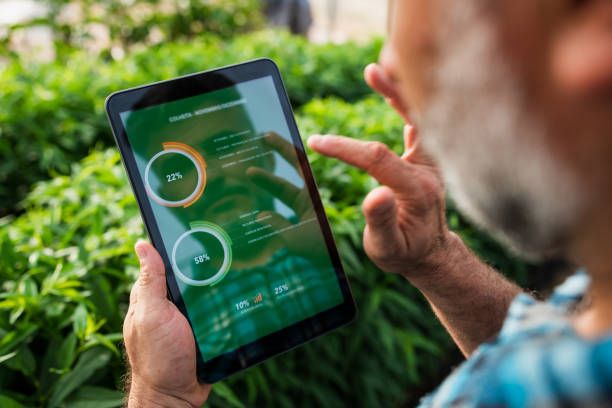
Managing dispersed farm properties without digitized data tracking requires long daily drives between fields and facilities. IoT software aggregates data streams from every connected sensor, drone, camera, and tractor into user-friendly mobile and web dashboards. Farm owners view live field statuses, receive immediate push notifications regarding equipment faults or frost alerts, and trigger equipment remotely from a smartphone. Remote management control allows a single producer to oversee hundreds of acres efficiently from anywhere.
Blockchain Integration and Transparent Food Traceability
Consumers, food retailers, and agricultural exporters increasingly demand verifiable proof regarding food origin, organic certifications, and chemical handling. IoT systems feed environmental telemetry, harvest timestamps, and shipping records directly into immutable blockchain ledgers. Consumers scan a QR code on food packaging to view the item's complete, verified digital journey from planting date and chemical application logs to cold-storage transport temperatures. Transparent digital traceability verifies product authenticity, builds consumer trust, and secures premium retail pricing.
Predictive Maintenance for Agribusiness Equipment
Unexpected mechanical breakdowns during time-critical planting or harvest windows cause severe operational delays and costly repairs. Telematics and vibration sensors installed on pumps, conveyor belts, tractors, and sorting machines monitor operating temperatures, oil viscosity, and mechanical friction continuously. Machine learning algorithms process equipment diagnostic trends to detect early mechanical wear and predict component failures before breakdowns occur. Predictive maintenance schedules servicing during planned downtime, extending equipment lifespans and lowering repair expenses.
Recommended Reading & Industry Resources
To explore detailed case studies, technical breakdowns, and industry guides on agricultural IoT implementations, review these authoritative blog posts:
- Digi International's IoT in Agriculture Guide Detailed breakdown of 10 smart farming use cases, hardware connectivity, and yield optimization.
- FloLive's IoT Farming Use Cases and Best Practices Strategic insights into cellular connectivity, precision farming, and drone integration.
- Blynk's Connected Agricultural Sensors Analysis In-depth overview of soil probes, automated irrigation, and real-world ROI metrics on connected farms.
Frequently Asked Questions
What are the primary hardware components required to build an agricultural IoT network?
An agricultural IoT setup typically requires field sensors (soil, weather, crop probes), wireless communication modules (LoRaWAN, cellular, or satellite hubs), cloud processing servers, and end-user dashboards (mobile or web applications).
How do IoT sensors transmit data across remote rural areas without reliable cellular coverage?
Remote IoT deployments utilize Low-Power Wide-Area Networks (LPWANs) such as LoRaWAN or satellite gateways. Field sensors communicate with a local central gateway over long distances using minimal battery power, and the gateway transmits aggregated data to the cloud via satellite or long-range cellular connections.
Can IoT technology integrate with older, legacy farm machinery?
Yes. Aftermarket retrofitting kits allow farmers to attach IoT telematics sensors, GPS autosteer units, and flow rate monitors to legacy tractors, pumps, and sprayers, enabling smart features without buying brand-new machinery.
How does IoT in agriculture help reduce operational costs for farmers?
IoT reduces costs by eliminating resource waste; smart irrigation saves water and electricity, variable rate applicators cut chemical usage, and predictive maintenance prevents expensive machinery breakdowns during peak harvest seasons.
Is farm data collected by IoT devices secure and private?
Reputable AgTech software platforms use encrypted data transmission protocols and secure cloud storage to protect farm data. Modern platforms ensure farm owners retain full ownership of their field data and control who accesses operational reports.
Ready to deploy custom IoT software dashboards, automate field telematics and digitize your agricultural enterprise? Contact Qolani Kreatives today to partner with our expert technical team for custom AgTech web, mobile, and IoT platform development!

