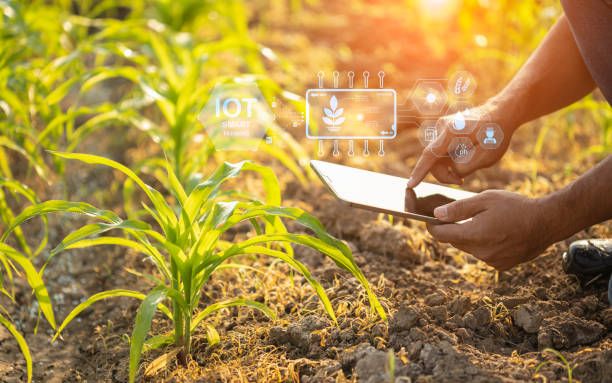
What are the challenges of adopting Agritech?
The rapid evolution of agricultural technology holds massive promise for boosting global crop yields, optimizing resource utilization, and driving farm sustainability. However, transitioning traditional farming enterprises into data-driven digital operations is fraught with complex operational, financial and cultural friction.
Many growers find themselves caught between the promise of modern precision tools and the real-world barriers of high equipment costs, unreliable rural infrastructure, and steep learning curves. Understanding these structural hurdles is essential for AgTech developers, policymakers and agricultural leaders working to accelerate technology integration. Here are fifteen critical challenges hindering the widespread adoption of Agritech across modern farming operations.
High Upfront Capital Costs and Financial Strain
Purchasing advanced agricultural technologies such as autonomous machinery, multispectral drones, and soil sensor networks requires prohibitive initial capital investments. For smallholder and medium-scale farmers operating on tight seasonal margins, taking on heavy debt for unproven hardware represents a massive financial gamble. Without accessible equipment financing, subsidies, or clear short-term returns on investment, many growers choose to defer tech upgrades indefinitely.
Inadequate Rural Broadband and Cellular Infrastructure
Cloud-based Agritech platforms, IoT sensor nodes, and satellite mapping systems rely heavily on stable, high-speed internet and cellular connectivity to transmit field telemetry. Unfortunately, vast agricultural zones across both developing and developed nations suffer from persistent network dead zones and spotty mobile coverage. When connected field equipment loses cloud communication, real-time tracking fails, making complex software systems unreliable for daily farm management.
Digital Literacy Gaps and Steep Learning Curves
Operating sophisticated farm management software, interpreting complex spatial data dashboards, and calibrating precision machinery requires specialized technical skills. Many experienced farm managers and field laborers lack formal digital training, leading to frustration and operational errors when onboarding software platforms. Without accessible onboarding support and intuitive user interfaces, the steep learning curve creates a major barrier to long-term tech usage.
Overly Complex Interfaces and Poor User Experience
Many Agritech software solutions are designed by software engineers who lack hands-on agricultural experience, resulting in overly complicated user interfaces. Farmers working in bright sunlight, wearing gloves, or managing fast-paced field logistics require quick, intuitive mobile tools rather than buried drop-down menus and dense analytical charts. When software feels unintuitive or clunky, field crews quickly abandon it in favor of traditional pen-and-paper record-keeping.
Fragmented Systems and Lack of Software Interoperability
Modern farms often use tools from multiple hardware and software vendors, including tractor telematics, weather stations, soil probes, and accounting software. However, a lack of standardized industry data protocols prevents these isolated platforms from communicating seamlessly with one another. Farm managers end up trapped in data silos, forced to manually re-enter field metrics across disconnected dashboards rather than benefiting from a single, unified view.
Deeply Ingrained Cultural Resistance to Change
Farming practices are often built on generations of localized tradition, observational experience, and proven historical routines. Introducing automated algorithm-driven recommendations can evoke skepticism from growers who trust their personal field intuition over cloud-based AI models. Overcoming generational habits and building trust in automated decision-making requires demonstrable field evidence, local peer endorsements, and patient community engagement.
Data Privacy, Ownership, and Cybersecurity Concerns
Agribusinesses generate vast amounts of valuable field telemetry, including soil chemistry, proprietary yield rates, financial margins, and land boundaries. Many farmers are hesitant to upload sensitive operational data to third-party cloud servers due to fears of data monetization, corporate espionage, or land valuation manipulation. Clear, transparent data ownership contracts and robust cybersecurity protocols are vital to alleviating grower paranoia around cloud platforms.
One-Size-Fits-All Solutions Mismatched to Local Conditions
Agricultural environments vary drastically depending on local microclimates, soil compositions, water availability, and regional crop types. Many generic Agritech platforms developed for massive commercial grain farms fail to perform accurately when applied to smallholder plots or specialized horticulture. When technology providers fail to customize algorithms for local agronomic realities, software recommendations prove inaccurate and lose credibility with farmers.
Inadequate Vendor After-Sales Support and Maintenance
Agricultural machinery and field sensors operate in harsh outdoor environments exposed to severe dust, heat, moisture, and chemical vibration. When high-tech equipment breaks down during time-sensitive planting or harvesting windows, farmers cannot afford to wait weeks for specialized technicians or imported replacement parts. Weak local vendor support networks and slow repair turnarounds turn minor hardware failures into disastrous seasonal harvest losses.
Perceived Risk Aversion and Uncertain Return on Investment
Agriculture is inherently exposed to unpredictable environmental factors like volatile weather patterns, pest outbreaks, and sudden market price crashes. Managing these existing risks makes farmers naturally risk-averse when evaluating unproven digital technologies. If an AgTech startup cannot clearly prove how its tool reduces costs or increases net profits within one to two growing seasons, farmers view the software as an unnecessary financial vulnerability.
Unreliable Power Grids and Energy Constraints
Deploying automated field gateways, smart irrigation pumps, and climate-controlled storage hubs requires a continuous, stable supply of electrical power. In many rural farming communities, erratic power grids, frequent blackouts, and high fuel costs for backup generators disrupt automated operations. Without off-grid solar infrastructure or reliable rural power grids, maintaining connected field hardware becomes difficult and expensive.
Lack of Tailored Financial Services and Credit Facilities
Commercial banks and agricultural lenders often lack specialized frameworks to evaluate technology investments on farms. Traditional loan officers easily underwrite physical tractors or land acquisitions but hesitate to fund software subscriptions, sensor deployments, or cloud analytics tools. A lack of flexible credit arrangements, lease-to-own models, or AgTech-focused loans limits farmers' ability to finance digital transformations.
Complex Regulatory, Compliance, and Policy Barriers
Navigating evolving government regulations regarding agricultural drone flights, chemical application standards, and environmental data reporting can be overwhelming. Inconsistent regional policies and slow legislative approvals for emerging technologies such as gene-editing tools or autonomous equipment create marketplace uncertainty. Unclear regulatory frameworks discourage both AgTech developers from innovating and farm operators from adopting new solutions.
Severe Labor Shortages and High Turnover Rates
Implementing data collection procedures requires consistent execution by trained farm hands and machine operators. However, the global agricultural sector struggles with persistent labor shortages and high seasonal worker turnover rates. Constantly retraining new field laborers on complex digital logging tools drains administrative resources and leads to inconsistent field data entry across growing seasons.
Insecure Land Tenure and Short-Term Leasing
In many farming regions worldwide, growers cultivate rented land under short-term lease agreements rather than owning the acreage outright. Installing permanent field infrastructure such as buried soil sensors, weather stations, or smart drip irrigation systems requires long-term capital that tenants are reluctant to spend on property they do not own. Insecure land tenure discourages long-term farm investments, restricting technology adoption to basic, portable mobile applications.
Recommended Reading & Strategic Industry Resources
To explore detailed academic research, market analysis, and industry case studies on Agritech adoption barriers, review these authoritative resources:
- Folio3 AgTech's Key Challenges & Barriers to Agricultural Technology Adoption In-depth breakdown of economic, technological, trust, and policy hurdles facing global farmers.
- Action Edge's 10 AgriTech Adoption Challenges Market Research Can Solve Practical analysis of farmer trust, usability issues, local customization, and ROI expectations.
- Agiliway's AgriTech Adoption: Farming Challenges and Opportunities Strategic insights covering upfront capital costs, steep learning curves, and infrastructure gaps in smart farming.
Frequently Asked Questions
Why are smallholder farmers slower to adopt Agritech compared to large commercial farms?
Smallholder farmers face strict capital limits, smaller land holdings that complicate ROI calculations, higher vulnerability to financial loss and a lack of access to specialized technology financing.
How can AgTech companies build trust with skeptical, traditional farm operators?
AgTech vendors build credibility by offering local on-farm pilot demonstrations, partnering with trusted regional extension officers, presenting clear peer testimonials and guaranteeing robust local support.
What role does offline functionality play in rural Agritech software success?
Offline functionality allows field workers to record data, map crops and track inventory without cellular signals, automatically syncing records to the cloud once network access is restored.
Are government subsidies effective at accelerating agricultural technology adoption?
Yes; targeted subsidies, tax incentives, and grant programs reduce initial capital barriers, making precision irrigation, drones and solar technology affordable for growing farms.
How can intuitive UX/UI design lower the learning curve for non-technical farmers?
Simplifying software through visual icons, multi-language support, voice inputs, and clean dashboards allows field workers to use digital tools effortlessly without extensive technical training.
Ready to bridge the digital gap in your agribusiness, overcome technology adoption hurdles and launch intuitive, high-converting digital tools tailored to your operations?