
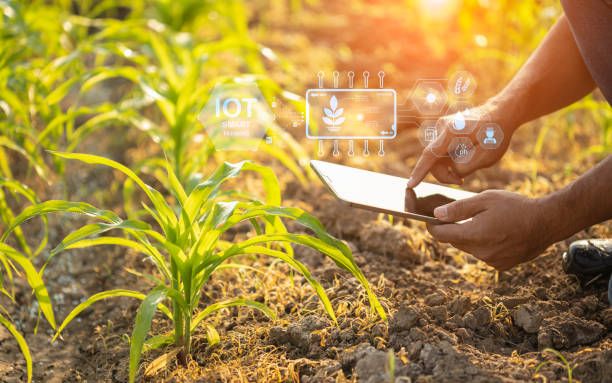
Ways Technology Can Improve Efficiency in Agriculture
Modern agriculture is undergoing an unprecedented digital transformation driven by the need for higher resource efficiency, climate resilience, and operational scalability. For agricultural enterprises, managing vast acreages, complex crop production cycles, and volatile input costs purely through manual labor and intuition is no longer viable.
Implementing modern digital technologies allows farm managers to transition from reactive operational models to proactive, data-informed workflows. By combining precision hardware, enterprise software platforms, cloud connectivity, and advanced field robotics, modern agribusinesses can drastically decrease operational friction, maximize yield quality, and protect operational margins across every stage of the farming life cycle.
1. Precision Irrigation Systems
Traditional flood or overhead irrigation often leads to massive water waste, soil erosion, and uneven moisture distribution across different crop zones. Smart irrigation technologies leverage IoT soil moisture sensors, weather forecasting integrations, and automated control valves to supply crops with exact water quantities precisely when needed. These automated micro-irrigation platforms minimize water and pumping energy consumption while keeping root systems in peak condition, as detailed in Digi's IoT Smart Farming Guide.
2. Automated GPS Guidance and Steering Systems
Navigating heavy machinery through expansive fields without overlapping or leaving skips creates excessive fuel consumption, equipment wear, and operator fatigue. Tractor-mounted Global Navigation Satellite System (GNSS) auto-steering systems use real-time kinematic positioning to guide farm machinery along pinpoint navigation lines with centimeter-level precision. This level of path accuracy drastically reduces fuel consumption, speeds up field preparation, and ensures highly uniform seed planting, which you can learn more about in Allynav's Precision Agriculture Insights.
3. Variable Rate Input Application (VRT)
Applying uniform quantities of fertilizer, lime, and crop protection chemicals across an entire field ignores natural variations in soil composition and nutrient availability. Variable Rate Technology (VRT) pairs prescription mapping with automated applicators to dynamically adjust input rates in real time based on specific field zone conditions. By applying higher rates only where needed and reducing inputs in fertile zones, farmers lower chemical costs, prevent soil degradation, and eliminate chemical runoff, as highlighted by IJOEAR's Research on Precision Farming.
4. Drones for Remote Crop Health Monitoring
Manual scouting across hundreds of acres on foot is time-consuming, labor-intensive, and frequently misses early pest infestations or nutrient deficiencies hiding in middle rows. Multispectral camera drones fly over crops to capture high-resolution imagery, generating precise Normalized Difference Vegetation Index (NDVI) heatmaps. Farm managers can instantly pinpoint stressed plants, detect early disease outbreaks, and deploy localized treatments days or weeks before visual symptoms manifest to the naked eye.
5. IoT Environmental and Soil Sensors
Continuous, accurate data on soil temperature, electric conductivity, ambient humidity, and solar radiation is critical for making time-sensitive agronomic decisions. Wireless Internet of Things (IoT) field sensors stream uninterrupted soil and atmospheric data straight to central management dashboards. Having access to live microclimate metrics helps farm managers schedule ideal planting dates, optimize spray timings, and avoid crop damage caused by unpredicted micro-frosts or heat stress.
6. Automated AI Crop Disease Identification
Identifying crop pathologies accurately requires significant agronomic expertise that is not always immediately available directly on the field. AI-powered image recognition tools built into mobile smartphone applications allow field teams to capture photos of symptomatic leaves or stems and receive instant diagnostic analyses. Immediate disease identification enables farmers to source and apply targeted crop remedies instantly, curtailing crop losses before infections spread across entire fields.
7. Automated Grain Storage Monitoring
Post-harvest losses caused by unmonitored moisture spikes, fungal growth, or insect infestations in storage silos routinely wipe out substantial annual farm profits. Smart grain storage platforms utilize automated temperature, gas, and humidity sensors positioned inside storage structures to continuously track environmental parameters. Automated aeration systems trigger instantly when moisture thresholds are crossed, protecting harvested grain quality and reducing storage spoilage, as detailed on ThingsBoard's Smart Farming Platform.
8. Precision Livestock Health Tracking
Managing large livestock herds manually makes it difficult to detect early signs of animal distress, illness, or reproductive heat cycles until production drops. Wearable smart collars, ear tags, and biometric sensors monitor individual animal body temperatures, movement patterns, and rumination activity around the clock. Automated health alerts flag sick animals for early isolation and treatment, reducing veterinary costs, curbing antibiotic overuse, and optimizing breeding timelines.
9. Smart Greenhouse Climate Automation
Maintaining ideal microclimates in traditional greenhouses requires constant manual adjustment of shade cloths, ventilation louvers, heater units, and humidifiers. IoT-enabled smart greenhouses use closed-loop automation platforms to automatically regulate temperature, carbon dioxide levels, lighting duration, and nutrient delivery. Eliminating human error maintains perfect growing conditions 24/7, yielding faster crop cycles and higher overall harvest volumes with lower energy usage.
10. Automated Farm Fleet Management Platforms
Managing large fleets of tractors, harvesters, sprayers, and transport trucks without telemetry tools frequently leads to unauthorized machine idling, inefficient routing, and unexpected breakdowns. Cloud-based fleet management platforms track real-time machine telemetry, engine diagnostic codes, fuel burn rates, and equipment operating locations. Farm managers can streamline daily equipment deployments, optimize fuel consumption, and enforce preventative maintenance schedules to prevent costly downtime during peak seasonal windows.
11. Farm ERP and Financial Accounting Integration
Operating an agribusiness without unified financial and operational management tools makes calculating precise cost-per-acre or product profitability nearly impossible. Integrated Enterprise Resource Planning (ERP) software tailored for agriculture unifies inventory tracking, labor costs, field activity logs, and yield metrics into a central database. Having complete accounting visibility gives farm executives accurate financial intelligence to negotiate better input pricing, secure farm credit, and maximize operating margins.
12. Automated Crop Yield Mapping and Analytics
Relying purely on total harvest weight figures fails to reveal which specific areas of a field yielded top profits and which areas operated at a net loss. Modern combine harvesters equipped with spatial yield monitors record real-time grain weight and moisture variations as crops are harvested across the field. Generating detailed yield maps allows agronomists to analyze performance against seed rates and fertilizer applications, fine-tuning input strategies for the following season.
13. Supply Chain Traceability and Blockchains
Commercial buyers, export market auditors, and modern consumers demand complete proof of produce origin, chemical safety compliance, and sustainable farming practices. Digital supply chain tracking platforms generate unique QR codes or cryptographic digital records for every harvested lot, documenting field origins, harvest dates, and cold chain logs. Providing end-to-end supply chain transparency satisfies strict regulatory requirements and allows farm enterprises to command premium pricing in high-value export markets.
14. Autonomous Field Robotics and Weeding Machines
Widespread agricultural labor shortages and the rising cost of chemical weed control are driving rapid adoption of autonomous field robotics. Solar and battery-powered robotic weeders navigate crop rows autonomously using laser vision and mechanical micro-blades or high-precision micro-sprays to destroy weeds. These automated field robots run continuously day and night, drastically cutting manual labor demands while paring chemical herbicide use down to minimum levels.
15. AI-Powered Predictive Yield and Market Forecasting
Volatile commodity pricing makes predicting enterprise revenue and securing optimal forward contracts difficult for commercial agricultural operations. Advanced predictive analytics engines combine historical field yield logs, real-time satellite vegetation indices, and regional weather forecasts to project final harvest volumes weeks before picking begins. Accurate production estimates empower farm sales managers to negotiate contracts with grain buyers and exporters at maximum market prices with confidence.
Ready to modernize your agricultural workflows and build lasting client relationships?
At Qolani Kreatives, we specialize in building custom digital platforms, web portals, mobile apps, and customer management solutions designed specifically for growing agribusinesses. Contact our team today at +254 740 076 772 to schedule a strategy consultation and transform your agricultural operations.

