
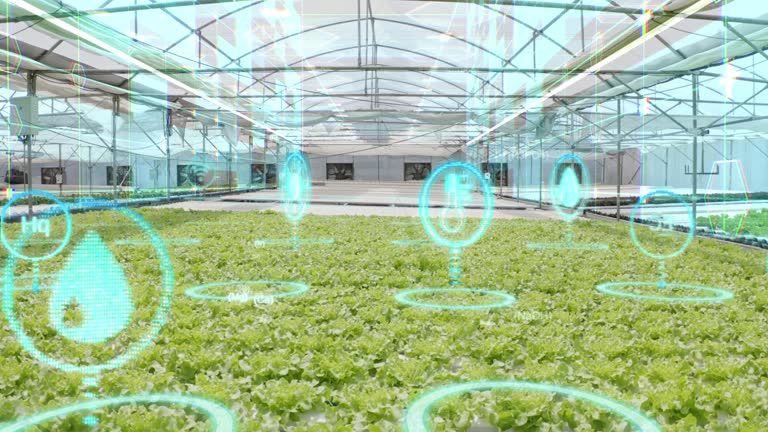
Ways Technology Can Improve Your Agribusiness
Modern agricultural enterprises operate within a complex economic and environmental ecosystem where traditional manual methods no longer guarantee profitability. Adopting modern agricultural technology ranging from cloud-based management platforms and Internet of Things (IoT) field sensors to automated robotics and artificial intelligence allows commercial farms, distributors and agtech companies to eliminate operational waste.
Digitizing field operations gives agribusiness owners full visibility over their land, financial records, labor schedules, and supply chain logistics. Here are fifteen critical ways technology elevates modern agribusiness operations.
1. Driving Precision Agriculture Through IoT Sensors
Deploying Internet of Things (IoT) field sensors provides real-time monitoring of soil moisture, ambient temperature, electrical conductivity, and nutrient profiles directly from the field. Instead of applying water or chemical fertilizers uniformly across an entire acreage, smart sensors map exact field variations to deliver inputs only where needed. Ground-level telemetry eliminates guesswork, optimizes natural resource consumption, and ensures crops receive precise hydration and nutrients throughout their growth stages.
2. Automating Irrigation and Conserving Water Resources
Smart irrigation systems pair real-time soil moisture sensor data with hyper-local weather forecasts to automate watering cycles dynamically. Automated solenoid valves open and close based on actual crop evapotranspiration rates rather than rigid clock timers, preventing soil saturation and root suffocation. Optimizing irrigation schedules reduces agricultural electricity and water consumption by up to 30%, lowering utility overhead while protecting valuable underground aquifers.
3. Deploying Drones for Aerial Scouting and Crop Health Mapping
Scanning expansive fields on foot makes detecting localized pest infestations, nutrient deficiencies, or irrigation leaks extremely labor-intensive. Unmanned Aerial Vehicles (UAVs) equipped with multispectral and thermal cameras map hundreds of acres in minutes, generating Normalized Difference Vegetation Index (NDVI) heatmaps. Aerial imaging pinpoints crop stress long before visual symptoms become apparent to the human eye. Spotting crop health issues early enables farm managers to execute targeted treatments, saving input costs and preserving yield expectations.
4. Leveraging AI-Powered Predictive Analytics for Yield Forecasting
Integrating machine learning algorithms with historical climate data, soil metrics, and satellite imagery allows agribusinesses to forecast seasonal harvest yields accurately. Predictive AI models evaluate microclimate patterns to warn growers of upcoming frost risks, drought conditions, or disease outbreak windows. Accessing predictive yield forecasts allows agribusiness owners to negotiate forward-sales contracts at optimal market prices and organize harvest logistics efficiently.
5. Streamlining Operations with Farm Management Software (FMS)
Relying on paper ledgers or fragmented spreadsheets creates severe communication delays and financial tracking errors across multi-site farming operations. Cloud-based Farm Management Software (FMS) serves as a centralized digital command center, aggregating workforce logs, input inventory, machinery telematics, and financial records. Real-time operational dashboards provide management with full cost clarity per field block, streamlining task assignment and simplifying financial auditing.
6. Enhancing Livestock Management with Wearable Biometrics
Managing cattle, swine, or poultry herds manually makes tracking individual animal health, breeding readiness, and disease symptoms difficult. Smart ear tags, collars, and rumination sensors continuously track biometric metrics, including body temperature, heart rate, movement, and feed intake. AI platforms process biometric data to detect early signs of illness or heat cycles automatically. Early disease isolation protects herd welfare, reduces reliance on mass antibiotics, and optimizes milk and meat production efficiency.
7. Cutting Labor Costs with Autonomous Machinery and Field Robotics
Rural labor shortages and rising wage costs present ongoing operational challenges for commercial agricultural operations. Modern tractors and field machinery equipped with GPS autosteer, geofencing, and AI vision systems navigate fields autonomously with sub-inch accuracy. Autonomous mechanical weeders, robotic fruit harvesters, and automated seeding equipment operate continuously without driver fatigue. Automating heavy field tasks lowers labor expenses, speeds up field operations, and eliminates human steering overlaps.
8. Bypassing Middlemen with Direct-to-Consumer Digital Platforms
Traditional agricultural supply chains rely heavily on brokers, wholesalers, and distributors who consume significant portions of farm profit margins. Building dedicated e-commerce portals and mobile marketplace applications allows agribusinesses to sell fresh produce, livestock, and processed goods directly to consumers and restaurants. Eliminating intermediary channels allows producers to capture full retail pricing, establish independent brand equity, and build predictable recurring revenue through CSA subscriptions.
9. Ensuring Complete Transparency Through Blockchain Traceability
Modern food buyers, regulatory agencies, and institutional consumers demand complete transparency regarding food origin, chemical applications, and cold-chain safety compliance. Integrating blockchain technology and smart QR codes creates an immutable digital audit trail recording every stage of a crop's journey from seed to retail store. Temperature-logging sensors track transit conditions inside shipping containers to verify freshness. Transparent digital traceability mitigates food recall risks, builds consumer trust, and secures premium market pricing.
10. Optimizing Equipment Fleet Maintenance Through Telematics
Unplanned machinery breakdowns during tight planting or harvest windows cause severe operational delays and expensive emergency repair bills. IoT telematics devices installed on tractors, combine harvesters, and transport trucks continuously monitor engine hours, fluid levels, fuel efficiency, and mechanical diagnostics. Automated maintenance software sends alerts when servicing is due based on actual operational hours rather than arbitrary calendar dates. Proactive fleet maintenance extends machinery lifespan, lowers fuel costs, and prevents downtime during peak seasons.
11. Maximizing Yields with Controlled Environment Agriculture (CEA)
Traditional open-field farming remains highly vulnerable to erratic weather events, land availability constraints, and seasonal soil degradation. Controlled Environment Agriculture (CEA) including smart greenhouses, hydroponics, aeroponics, and vertical farms uses automated climate systems to control temperature, humidity, CO2, and LED lighting year-round. Digitally controlling indoor microclimates reduces water consumption by up to 90%, eliminates weather dependency, and delivers continuous, high-density crop production.
12. Facilitating Financial Access and Credit Scoring for Farmers
Smallholder farmers and growing agribusinesses historically struggle to secure commercial bank loans or affordable crop insurance due to a lack of traditional credit records. Digital farm software generates verifiable operational records—including land boundaries, historical harvest yields, and digital transaction logs—to build digital farmer identities. Financial institutions leverage alternative data scoring to evaluate creditworthiness accurately, granting farmers access to capital for machinery upgrades, seeds, and expansion.
13. Securing Supply Chains with Real-Time Logistics Tracking
Perishable agricultural commodities risk post-harvest spoilage if cold-chain transport conditions fluctuate during long-distance transit. GPS-enabled IoT sensors placed inside refrigerated transport trucks and grain silos monitor temperature, humidity, and location continuously. If a refrigeration unit fails or cargo experiences excessive shock, automated alerts trigger immediate corrective action before produce degrades. Real-time freight tracking protects post-harvest quality, lowers cargo insurance claims, and streamlines delivery schedules.
14. Implementing Variable Rate Technology (VRT) for Input Efficiency
Uniformly spreading seeds, fertilizers, and crop protection products across a variable field results in wasted inputs over fertile zones and inadequate treatment in depleted areas. Variable Rate Technology (VRT) pairs field prescription maps with smart tractor sprayers and seed drills to adjust application rates dynamically as equipment moves across the field. Applying agrochemicals precisely cuts total input purchases, lowers operational costs, and minimizes environmental chemical runoff into local watersheds.
15. Enabling Data-Driven Strategic Planning and Enterprise Scalability
Scaling an agribusiness requires evaluating multi-season crop performance trends, historical cost structures, and changing market demand patterns. Agtech platforms aggregate historical operational metrics into clear financial reports and business intelligence dashboards. Analyzing multi-year operational analytics helps agribusiness executives make confident, data-backed decisions regarding land acquisition, crop diversification, and machinery investments. Data-driven management transforms traditional farming into a resilient, scalable enterprise.
Recommended Reading & Industry Resources
To explore detailed research, technical guides, and industry case studies on agribusiness technology, check out these authoritative articles:
- BRQ's Technology in Agribusiness Possibilities In-depth analysis of digital agriculture, AI, cloud platforms, and operational cost reduction.
- ThriveAgric's Impact of Technology on Farm Productivity Strategic insights into precision technology, farm management software, and digital marketplaces.
- Robovision's Top AgTech Trends & AI Innovations Detailed overview of robotics, computer vision, vertical farming, and AI-powered precision agriculture.
Frequently Asked Questions
How can a small-scale agribusiness afford modern agricultural technology?
Many agtech solutions are modular and cloud-based, allowing farmers to adopt affordable tools such as mobile record-keeping apps, basic soil moisture sensors, or digital marketplaces without large upfront capital investments.
Does farm management software work in remote rural areas without internet access?
Yes, most modern farm management mobile applications include offline data-capturing capabilities that allow field staff to log activities offline, synchronizing data automatically once cellular or Wi-Fi connection is restored.
How does adopting technology in agribusiness help protect the environment?
Agribusiness technology promotes sustainability by optimizing resource use; precision application tools reduce synthetic chemical runoff, smart irrigation conserves water, and GPS autosteer lowers tractor fuel emissions.
Can older tractors and farm machinery be upgraded with modern smart technology?
Yes, aftermarket retrofitting kits allow farmers to install GPS autosteer modules, IoT telematics sensors and variable-rate rate controllers onto legacy machinery without purchasing expensive new equipment.
What is the return on investment (ROI) timeline for digitizing farm operations?
Most agribusinesses experience a positive ROI within one to two harvest seasons through immediate savings on input costs (fertilizer, water, fuel), reduced labor hours and higher crop yields.
Ready to digitize your agricultural enterprise, automate field logistics and deploy custom software solutions tailored to your agribusiness? Contact Qolani Kreatives today to partner with our expert technical team for custom AgTech web, mobile, and IoT platform development!

