
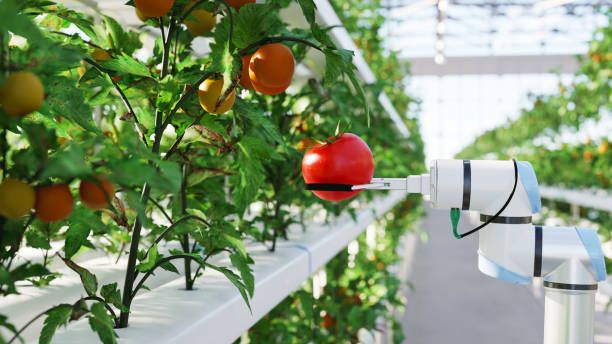
What is smart farming?
The global agricultural landscape faces a severe triple threat: shifting climate patterns, widespread resource degradation, and an expanding world population requiring greater food production. Smart farming the strategic integration of modern information and communication technology (ICT) into agriculture replaces traditional guesswork with data-driven precision.
By collecting real-time field telemetry through Internet of Things (IoT) sensors, automated drones, satellite mapping, and predictive artificial intelligence algorithms, smart agriculture enables farmers to make precise micro-decisions across every square meter of land. Adopting smart farming technologies lowers operational overhead, reduces environmental footprints, and secures long-term agricultural profitability. Here are fifteen foundational ways smart farming transforms modern agriculture.
1. Precision Soil Sensing and Real-Time Nutrient Mapping
Traditional soil testing relies on manual sampling sent to distant laboratories, taking weeks to deliver results while conditions on the field continue to change. Smart farming replaces delayed soil testing with connected, in-field IoT soil sensors that monitor moisture, temperature, electrical conductivity, and critical NPK (nitrogen, phosphorus, potassium) nutrient levels in real time. These ground sensors transmit continuous field telemetry to cloud dashboards, generating dynamic spatial soil maps across farm acreage. Having granular soil data enables farmers to apply targeted soil amendments and localized fertilizer applications, preventing nutrient leaching while boosting plant development.
2. Automated Smart Irrigation and Water Conservation
Overwatering wastes vital water resources, leaches soil nutrients, and increases energy pumping expenses, while underwatering severely stunts crop growth. Smart irrigation systems pair soil moisture readings with automated weather forecasts and evapotranspiration data to calculate precise crop water demands. Automated solenoid valves and drip lines trigger irrigation cycles only when soil moisture drops below specific agronomic thresholds. Tailoring water application directly to crop root zones lowers farm water consumption by up to 30%, conserves local aquifers, and optimizes crop hydration across all growth stages.
3. Drone-Based Aerial Imaging and Crop Health Monitoring
Inspecting hundreds of acres on foot makes early detection of localized plant stress, pest infestations, or drainage issues nearly impossible. Unmanned Aerial Vehicles (UAVs) equipped with multispectral, hyperspectral, and thermal cameras scan expansive crop fields within minutes. Drone imaging captures Normalized Difference Vegetation Index (NDVI) data, revealing subtle changes in chlorophyll absorption and plant vigor long before visual symptoms appear to the naked eye. Identifying crop stress early allows farm managers to apply spot treatments to affected field zones, saving input costs and preventing widespread harvest loss.
4. AI-Driven Predictive Weather Modeling and Risk Mitigation
Unpredictable climate events, localized frosts, sudden hailstorms, and unexpected droughts present massive financial threats to open-field farming. Smart farming platforms integrate hyper-local weather station data with AI predictive models to generate micro-climate risk forecasts for specific farm coordinates. Farmers receive real-time, automated alerts on their mobile devices warning of upcoming frost risks, high-wind spraying conditions, or sudden pest development windows. Access to predictive climate intelligence enables producers to take protective action, adjust harvest schedules, and shield delicate crops from severe weather damage.
5. Livestock Biometrics, Wearables, and Health Tracking
Managing large animal herds without continuous individual monitoring leads to delayed veterinary treatments, unmonitored disease outbreaks, and lost milk or meat yields. Smart livestock management attaches smart collars, ear tags, or rumination sensors to cattle, sheep, or swine to monitor vital signs, body temperature, movement patterns, and feed intake continuously. AI analytics process biometric data to detect early signs of lameness, respiratory infections, or heat cycles automatically. Early disease detection isolates sick animals quickly, reduces reliance on herd-wide antibiotics, and optimizes livestock welfare and reproductive success.
6. Autonomous Machinery, GPS Guidance, and Field Robotics
Manual tractor driving leads to operator fatigue, overlapping field passes, seed waste, soil compaction, and excessive fuel consumption. Smart farming deploys autonomous tractors, GPS-guided autosteer systems, and robotic weeders that navigate field rows with sub-inch accuracy. Autonomous field machinery executes seeding, tillage, mechanical weeding, and harvesting routines along optimized field paths day or night. Eliminating human steering error cuts fuel bills, speeds up field operations, minimizes soil compaction, and mitigates rural labor shortages.
7. Variable Rate Technology (VRT) for Targeted Input Application
Uniformly applying seeds, fertilizers, and crop protection chemicals across an entire field treats rich and poor soils identically, wasting expensive inputs on low-yield zones. Variable Rate Technology (VRT) pairs field prescription maps with smart tractor sprayers and seed drills to adjust application rates dynamically on the go. The equipment increases fertilizer rates in nutrient depleted soil zones while reducing chemical sprays over healthy, pest-free areas. Targeted input placement cuts total chemical usage, lowers operational costs, prevents runoff pollution into local waterways, and improves crop uniformity.
8. AI-Powered Visual Pest and Plant Disease Identification
Identifying plant diseases or insect pests manually often requires specialized agronomist consultations, delaying crucial treatment sprays. Smart farming mobile apps leverage computer vision and deep learning models to identify plant pathologies instantly from smartphone photos. Field workers photograph damaged leaves, and the computer vision model diagnoses the specific fungus, bacterium, or pest species within seconds while suggesting approved treatment solutions. Rapid digital diagnosis empowers field workers to contain crop threats before they spread, protecting seasonal harvest quality.
9. Controlled Environment Agriculture (CEA) and Smart Greenhouses
Traditional greenhouse operations require constant manual checks of temperature, ventilation flaps, shading screens, and humidity levels. Smart greenhouses utilize environmental IoT sensor arrays connected to automated climate controllers. Algorithms adjust LED supplemental lighting, automated shade curtains, misting systems, and carbon dioxide injectors to maintain an optimal growing microclimate year-round. Fully automated climate control maximizes year-round crop yields, minimizes disease vectors, and reduces heating and cooling energy expenses.
10. Automated Farm Management Software (FMS) and Cloud Dashboards
Managing farm records through physical notebooks or fragmented computer spreadsheets makes tracking multi-field operating costs and profit margins difficult. Farm Management Software (FMS) serves as a centralized digital command center, aggregating data feeds from field sensors, machinery telematics, workforce logs, and financial accounts. Cloud-based analytics convert raw farm data into clear performance charts, financial audit reports and seasonal yield projections. Centralizing operational records streamlines daily farm logistics, simplifies regulatory reporting, and gives farmers financial clarity across all enterprise units.
11. End-to-End Supply Chain Traceability and Blockchains
Modern food consumers and retail buyers demand verifiable proof regarding food origin, organic farming practices, and cold-chain safety compliance. Smart farming integrates IoT tracking sensors and blockchain technology to record every stage of a crop's lifecycle from seed planting to retail shelf delivery.
Smart temperature sensors log cold-storage transit conditions continuously, ensuring perishable shipments remain within safe temperature thresholds. Verifiable digital traceability builds strong buyer trust, mitigates food safety recall risks, and opens access to premium consumer markets.
12. Predictive Yield Forecasting and Financial Planning
Inaccurate yield estimations make negotiating sales contracts with grain elevators, food processors, or food retailers risky. Smart farming platforms process satellite vegetation indices, historical soil health records, and AI climate projections to forecast harvest yields weeks before picking begins. Accurate yield forecasts allow farmers to secure forward sales contracts at optimal market prices and organize harvest labor, transportation trucks, and storage bins efficiently. Data-backed yield modeling stabilizes financial cash flows and lowers post-harvest losses.
13. Smart Grain Storage Monitoring and Quality Preservation
Improper grain storage moisture or temperature spikes after harvest lead to mold growth, insect infestations, and catastrophic post-harvest grain loss. Smart storage silos utilize wireless sensor cables suspended inside grain mass to measure humidity, carbon dioxide spikes, and internal temperature profiles continuously. When storage sensors detect hot spots indicative of pest activity or moisture accumulation, automated aeration fans activate immediately to stabilize conditions. Continuous grain monitoring preserves post-harvest crop quality, allowing farmers to hold grain safely until market prices rise.
14. Carbon Footprint Tracking and Sustainability Metrics
Agricultural operations face growing pressure to reduce greenhouse gas emissions, minimize synthetic chemical runoff, and build sustainable land management practices. Smart farming platforms automatically record fuel consumption, fertilizer application density, water usage, and carbon sequestration rates per acre. Documenting environmental metrics allows farming enterprises to verify sustainable land stewardship practices and qualify for government conservation subsidies. Quantifying farm sustainability metrics opens lucrative revenue opportunities in global carbon credit exchanges.
15. Labour Reduction and Remote Operational Management
Rural migration and aging demographics have created severe agricultural labor shortages across worldwide farming regions. Smart farming technologies including automated valve actuators, remote telemetry monitors, and autonomous field robots allow a single farm manager to oversee hundreds of acres remotely via a mobile app. Remote operational control eliminates repetitive manual labor, reduces overall staffing expenses, and protects farm productivity. Digitizing farm tasks makes agricultural management less physically demanding and more attractive to tech-savvy young producers.
Recommended Reading & Industry Resources
To explore authoritative research, technical guides and industry insights on smart agriculture, explore these resources:
- IBM's Deep Dive on Smart Farming & AgTech A comprehensive guide covering IoT sensors, agricultural robotics, and cloud-based AI analytics in modern agriculture.
- GlobalDev Tech's Smart Farming Technologies Overview Technical breakdown of smart crop management, autonomous ground vehicles and farm software architectures.
- Softices' Smart Agriculture with AI + IoT Guide In-depth analysis of environmental monitoring, wearable livestock biometrics and predictive yield analytics.
Frequently Asked Questions
What is the difference between smart farming and traditional precision agriculture?
While precision agriculture focuses primarily on precise spatial measurement (like applying fertilizer to specific field zones), smart farming expands this concept by integrating continuous real-time data flow, IoT automation, artificial intelligence, and cloud-based operational management across the entire farm.
Do farmers need constant high-speed internet across all fields to use smart farming tools?
No. Many modern smart farming sensors and mobile field applications utilize low-power wide-area networks (like LoRaWAN) or offline data-capturing features. Field data stores locally on mobile devices or edge hubs and synchronizes automatically with cloud servers once connected to Wi-Fi or cellular networks.
Is smart farming technology affordable for small-scale and family farms?
Yes. Modular IoT sensors, smartphone-based AI disease diagnosis apps, and cloud-based farm software have made smart technology highly accessible. Small-scale producers can start with affordable soil sensors or smart irrigation controllers and scale their tech adoption gradually as farm profitability increases.
How does smart farming contribute to environmental sustainability?
Smart farming optimizes resource usage by applying water, fertilizers, and pesticides only when and where strictly necessary. Reducing chemical runoff protects surrounding ecosystems, while automated equipment lowers tractor fuel consumption and carbon emissions.
Can smart farming technologies integrate with existing, older farm machinery?
Yes. Aftermarket retrofitting kits allow farmers to add GPS autosteer systems, IoT telematics modules and variable-rate controllers to legacy tractors and implements without purchasing expensive, brand-new machinery.
Ready to modernize your agricultural enterprise, automate field logistics, and deploy custom smart farming software tailored to your farm? Contact Qolani Kreatives today to partner with our technical software team for custom AgTech solutions and digital platform development!

